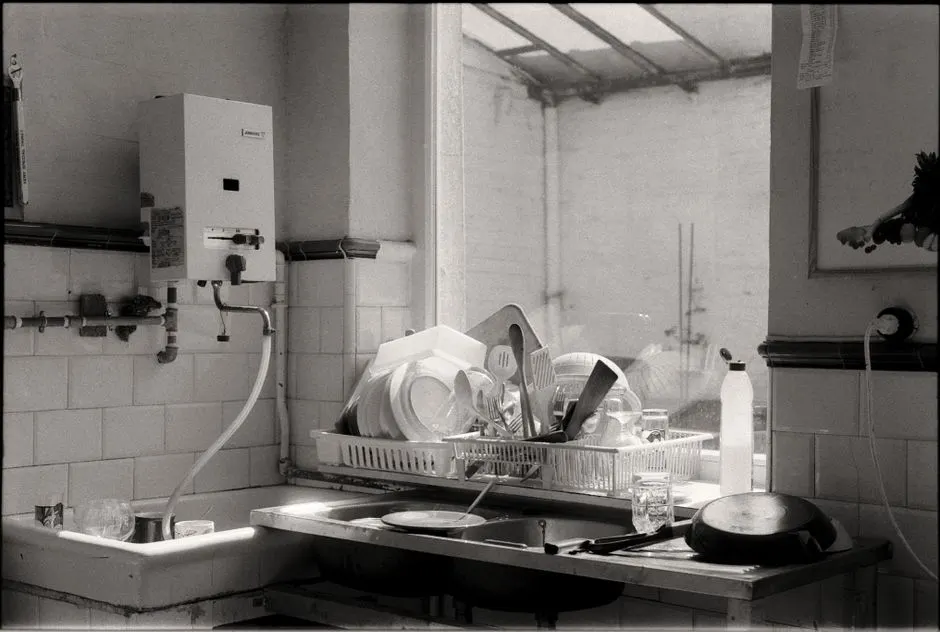
A kitchen sink draining slowly is almost always a partial clog in the P-trap, the branch drain, or the main line - not a plumbing mystery. The water still goes down because there's a channel through the buildup, and that channel narrows every week until the sink stops draining altogether. If you're in Naples and the drain has been getting slower for a month or more, the blockage is already substantial and will not clear on its own. Below we cover the real causes we see on service calls, what you can safely fix yourself, what a drain cleaning costs in 2026, and the exact point where DIY stops being worth your Saturday.
The Short Answer: What's Actually Blocking Your Drain
Kitchen sink draining slowly is a plumbing symptom that means the wastewater is moving through a restricted pipe rather than a clear one. The restriction is usually a mix of grease, soap scum, food particles, and - in older Naples homes - scale and rust flaking off the inside of galvanized steel pipe. Water finds a path through the top of that mess. Grease and solids keep accumulating on the walls until the path closes.
Three things tell you how bad it is. If only the kitchen sink is slow, the clog is local - P-trap or the branch line feeding it. If the kitchen sink gurgling in Naples is paired with slow drains in the bathroom or laundry, the blockage is further down the main line. If water backs up into the other sink basin or the dishwasher, you're looking at a shared drain that needs to be cleared with equipment, not a plunger.
Why Is My Kitchen Sink Draining Slowly in Naples FL?
Naples has a specific set of conditions that make kitchen drains clog faster than in most of the country, and it's not just the cooking. Three local factors do most of the damage.
First, the water itself. Naples municipal water and most well water in the area run hard - commonly in the 7 to 10 grains-per-gallon range. Hard water leaves calcium and magnesium deposits inside pipes. Those deposits give grease something to grab onto. A drain that would take two years to clog in a soft-water city can close up in eight to twelve months here.
Second, the housing stock. A large share of Naples homes were built between 1970 and 1995, and many still have original cast iron or galvanized steel drain lines under the slab. Those pipes corrode from the inside. By the time a house is 35 years old, the interior diameter of a 2-inch kitchen drain can be down to an inch and a half or less. Nothing you pour down the sink fixes that.
Third, the season. From November through April, Naples kitchens work harder. Snowbirds are back, holiday cooking runs heavy, and the volume of grease and food scraps going down the drain roughly doubles for five months. We see a clear spike in slow-drain calls starting the week after Thanksgiving and running through Easter. If your drain started slowing in late fall, that's why.
Homeowners across plumbing in Pelican Bay deal with this on a compressed timeline because so many of those units are seasonal - the pipes sit unused for six months, then get hit with heavy use the week the owners arrive.
The Six Most Common Causes We Find
When we pull a kitchen sink apart on a service call in Naples, the cause is almost always one of these six things. The order below is roughly how often we find each one.
- Grease and fat buildup. The single most common cause. Cooking oil, bacon fat, butter, and salad dressing cool inside the pipe and coat the walls. Over months, that coating traps everything else. Grease clog kitchen sink Naples Florida calls are the number one reason we're dispatched to a kitchen.
- Garbage disposal buildup. Coffee grounds, eggshells, potato peels, rice, and pasta all pass through the disposal but don't fully break down. They settle in the P-trap and the horizontal run behind it. A kitchen sink draining slowly after garbage disposal Naples FL use is usually this - the disposal is fine, the drain downstream is packed.
- P-trap blockage. The curved pipe under the sink is designed to hold water and catch debris. When it fills with sludge, water drains slowly and often smells. This is the easiest clog to clear and the one most homeowners can handle.
- Clogged branch or main line. If the kitchen sink and another fixture are both slow, the blockage has moved past the P-trap into the branch drain or the main sewer line. This needs a cable or jetter, not a plunger.
- Blocked vent stack. Every drain needs air behind it to flow. If the vent pipe on the roof is blocked by a bird nest, leaf debris, or a failed air admittance valve, the sink drains slowly and gurgles. This is the cause people miss most often, because the drain itself is clear.
- Pipe scale and corrosion. In older Naples homes with galvanized or cast iron drain lines, the inside of the pipe narrows over decades. No amount of chemical or snaking restores full flow. This is when we start talking about repiping.
If you've had the same drain cleared twice in a year, the problem is not the clog. It's the pipe. That's the point where we recommend a camera inspection rather than another round of snaking.
How to Unclog a Kitchen Sink in Naples (What Actually Works)
You can clear most partial kitchen clogs yourself in under an hour with tools you already own. Work through these steps in order and stop as soon as the drain runs free.
Step 1: Boil water and dish soap
Bring a full kettle to a boil. Squirt a generous amount of grease-cutting dish soap down the drain, then pour the boiling water in two or three stages, waiting 30 seconds between each. This melts light grease and moves it along. It works on early-stage clogs and does nothing for a packed P-trap.
Step 2: Plunge correctly
If you have a double-basin sink, seal the second drain with a stopper or wet rag first - otherwise you're just pushing water into the other basin. Fill the clogged side with two to three inches of water, seat the plunger over the drain, and plunge 15 to 20 times with firm strokes. Pull up sharply on the last stroke to break the seal.
Step 3: Clean the P-trap
Put a bucket under the trap, unscrew both slip nuts by hand, and pull the trap off. Most of the time you'll find a grey, greasy mass in the bottom of the curve. Scrub it out with a bottle brush and hot soapy water, then reassemble. Run hot water for two minutes to check for leaks at the slip joints.
Step 4: Snake the branch line
If the trap was clean and the drain is still slow, feed a hand snake into the wall stub and crank it through. You'll feel resistance when you hit the clog - keep turning until it breaks through, then flush with hot water.
If you've done all four steps and the sink is still slow, the blockage is past the point a hand snake will reach. That's when a professional drain cleaning Naples FL call makes sense - we run a camera first, so we know exactly what we're clearing before we put a cable or jetter in the line.
Does Baking Soda and Vinegar Work for Slow Drains in Naples Florida?
Baking soda and vinegar works on light organic buildup and does almost nothing for a grease clog or a scaled pipe. The reaction produces foam and mild agitation, which can loosen soft food residue in the top of the drain. It will not cut through the waxy grease layer that causes most slow kitchen sinks in Naples.
Here's the honest test: if the drain improves for a day and then slows again, the clog is still there and the baking soda just nudged it. If nothing changes at all, the blockage is past the P-trap. Save the box for the fridge and use hot water, soap, and a plunger instead.
What you should avoid is chemical drain cleaner. Sodium hydroxide products generate heat inside the pipe - enough heat to soften PVC joints and accelerate corrosion in older cast iron. On a drain that's already partially blocked, the chemical sits against the clog and does its damage to the pipe wall. We've pulled more than one Naples drain line that failed at a joint where drain cleaner had been used repeatedly.
What to Watch Out For: Mistakes That Make It Worse
Most of the expensive drain repairs we do in Naples start with a homeowner doing the right thing in the wrong order. These are the mistakes we see most.
- Pouring grease down the drain "with hot water." Hot water moves grease down the pipe. It doesn't remove it. The grease cools 10 to 15 feet downstream and sets up exactly where a hand snake can't reach.
- Running the disposal as a fix. If the drain is already slow, running the disposal pushes solids into a restricted line and packs them tighter. It turns a 30-minute service call into a two-hour one.
- Using a chemical cleaner on a fully blocked drain. The chemical sits in the basin and the trap, not on the clog. You get a sink full of caustic water and a burned-out finish on the basin.
- Snaking through the disposal. Never feed a cable through the disposal chamber. You will damage the shredder ring and the seals, and you still won't reach the clog.
- Ignoring the second slow fixture. If the bathroom sink is also slow, you're treating the wrong end of the problem. The main line needs to be cleared, not the kitchen branch.
- Assuming a recurring clog is normal. A drain that clogs twice in twelve months has a pipe problem. Clearing it a third time is money spent in the wrong place.
If you're in a seasonal community and the drain only slows when you arrive for the winter, the cause is usually the six months of sitting, not the two weeks of cooking. We see this constantly with plumbing in Lely Resort, where units sit closed from May to October and the first week back is when the calls come in.
Kitchen Sink Slow Drain Repair Cost in Naples
Typical 2026 pricing in this area runs from about $150 to $450 for a standard kitchen sink drain cleaning, depending on how far the clog sits and what equipment is needed. Here's how that breaks down.
- P-trap cleanout only: $95 to $175. Fastest job, usually under 45 minutes.
- Hand snake or power snake through the branch line: $175 to $325. Most common kitchen sink call.
- Hydro-jetting the branch or main line: $350 to $650. Used for grease-heavy lines and recurring clogs. Restores the pipe to full diameter instead of punching a hole through the blockage.
- Camera inspection: $150 to $300, often credited toward the cleaning if you book it together.
- Sewer line repair or replacement, if the camera shows a break or heavy root intrusion: $1,800 to $12,000 depending on length and method. Trenchless is at the higher end but avoids tearing up your landscaping.
If the camera shows a collapsed or root-invaded line, the fix is a sewer line repair Naples FL job, not a cleaning. We quote that separately and in writing before any work starts, so there are no surprises on the invoice.
When to Call a Professional
Call a plumber when the drain is still slow after you've cleaned the P-trap and plunged correctly, when two or more fixtures in the house are draining slowly, or when water backs up into the second basin or the dishwasher. Those three signs mean the clog is past the point a hand tool will reach.
Also call if you smell sewage at the sink, if the drain gurgles loudly when it empties, or if you've cleared the same line twice in the last year. Those point to a venting problem or a failing pipe, and neither one gets better with time.
Our team at Plumber Naples FL handles kitchen sink drain cleaning across the city, from single-family homes in plumbing in East Naples to high-rise units along the beach. We run a camera on recurring clogs before we quote anything, so you know whether you're paying for a cleaning or a repair. If you want a plumber who can also handle the rest of the house while we're there, our plumbing Naples FL team covers everything from faucets to water heaters on the same visit.
Frequently Asked Questions
Why is my kitchen sink draining slowly in Naples FL?
Grease and food buildup in the P-trap or branch line is the cause in roughly 8 out of 10 cases. Hard Naples water accelerates the buildup, and older galvanized or cast iron pipes narrow the drain further. If two fixtures are slow, the main line is the problem.
How do I unclog a slow kitchen sink in Naples?
Start with boiling water and dish soap, then plunge with the second basin sealed, then remove and clean the P-trap. If the drain is still slow after those three steps, the clog is past the trap and needs a snake or jetter. Most DIY attempts succeed within 45 minutes.
Does baking soda and vinegar work for slow drains in Naples Florida?
Only on light organic residue. It won't cut grease or scale, which cause most slow kitchen drains here. If the drain improves for a day and slows again, the clog is still in the pipe. Skip chemical cleaners - they damage older pipes.
How much does kitchen sink drain cleaning cost in Naples?
Expect $150 to $450 for a standard kitchen sink drain cleaning in 2026. A P-trap cleanout alone runs $95 to $175. Hydro-jetting for grease-heavy or recurring clogs runs $350 to $650. Camera inspection adds $150 to $300 and is often credited toward the cleaning.
When should I call a plumber for a slow kitchen sink in Naples FL?
Call when the drain stays slow after you've cleaned the trap and plunged, when a second fixture is also slow, or when water backs up into the other basin. Recurring clogs - twice in a year - mean the pipe itself needs to be inspected.
Get Help With Plumbing in Naples
A slow kitchen sink is a small problem right up until the day it floods your cabinet. If you've tried the plunger and the trap and the drain is still backing up, we can clear it today and tell you whether it's a one-time clog or a pipe that's on its way out.
Call Plumber Naples FL at (239) 522-0938 and we'll get a technician to your kitchen with the right equipment the first time.